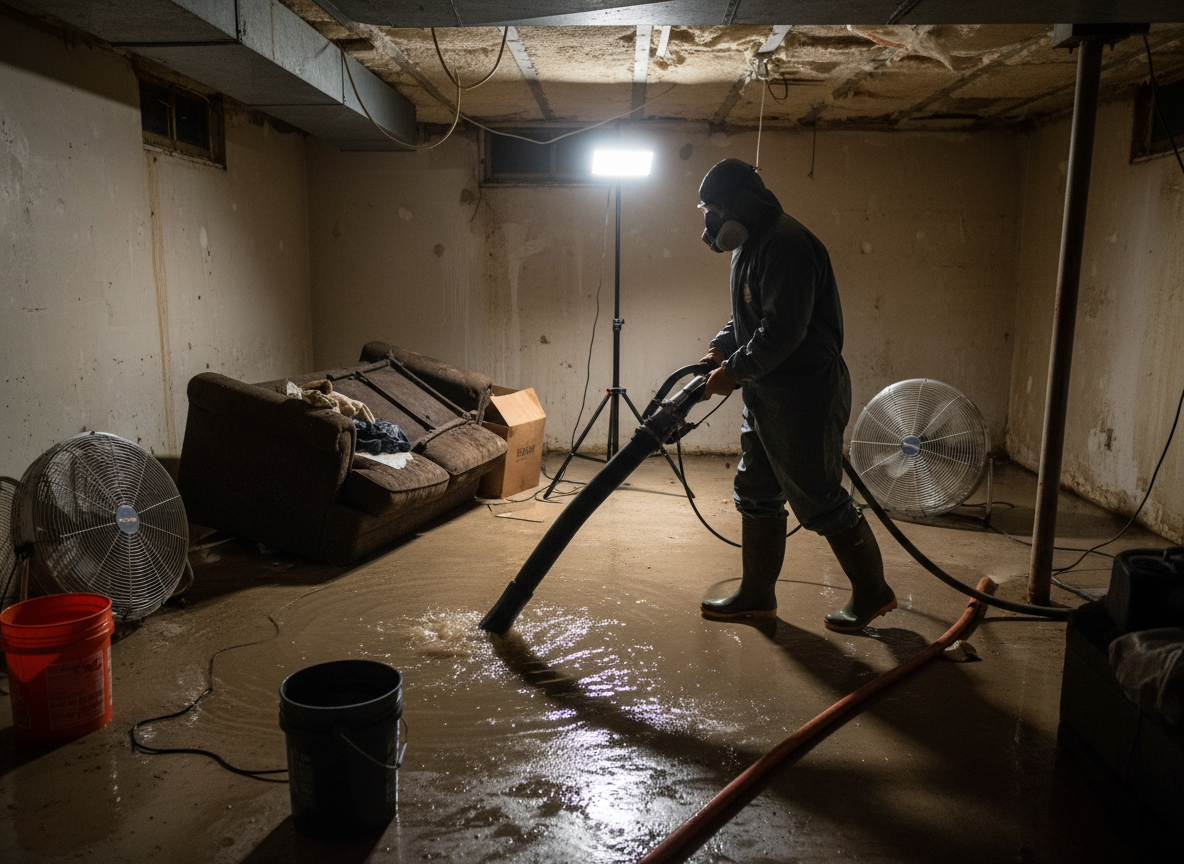
Harbor City sits in a mild Mediterranean climate where occasional intense winter rains can overwhelm older storm drains, especially in lower-lying pockets near Harbor Pines. Many homes here date from the 1950s and 1960s with concrete basements or partial cellars that develop hairline cracks over decades. When water enters through those fissures or around foundation walls, it quickly saturates insulation, drywall, and flooring. Technicians must map moisture behind finishes rather than relying on surface drying alone, because trapped water leads to hidden mold growth within 48 hours in the area's moderate humidity.
Extraction equipment has to handle both clear floodwater and the occasional sewage backup common near older municipal lines that run through Wilmington and Lomita borders. After pumps remove standing water, crews use thermal imaging to locate pockets trapped under slabs or behind stucco that is prevalent on local housing stock. Dehumidifiers run longer here than in drier inland neighborhoods because ocean-moderated air slows evaporation. Homeowners are advised to move stored items off the floor before crews arrive, since porous materials like cardboard or carpet padding absorb contaminants fast and often cannot be saved.
Los Angeles County building codes require proper ventilation and vapor barriers when finishing basements after water events. Skipping these steps during repairs invites repeat flooding when the next rain hits. Crews also check sump pump function and exterior grading around properties near Harbor City Park, where slight slopes can direct runoff straight toward foundations. Addressing these site-specific details prevents callbacks and keeps insurance claims moving smoothly.
Technician insight
In Harbor City, the thing that catches most people out with basement flood cleanup is the clay-heavy soil around Harbor Pines that holds moisture against foundations long after rain stops, especially on mid-century homes where original perimeter drains have silted up.
Winter rain seepage near Harbor Pines
Water entered a Harbor City basement through foundation cracks after a heavy storm. Inspection showed saturated insulation and rising damp in the lower block wall. Crews extracted water, dried the space over four days, and treated surfaces to stop mold before reinstalling base trim.
How it works
- 1
On-site assessment
Technicians arrive from the Sepulveda Blvd location, document water depth and source, and test moisture levels in walls, floors, and contents.
- 2
Water extraction
Industrial pumps and wet vacuums remove standing water while protecting unaffected areas with containment barriers.
- 3
Drying and monitoring
Air movers and dehumidifiers run continuously with daily moisture readings until levels return to normal for the Harbor City climate.
- 4
Sanitizing and prevention
Antimicrobial treatments are applied and recommendations given for grading or drain improvements to reduce future risk.
Pricing
Upfront quotes provided after inspection; final cost depends on water volume, affected square footage, and whether contents require separate handling.