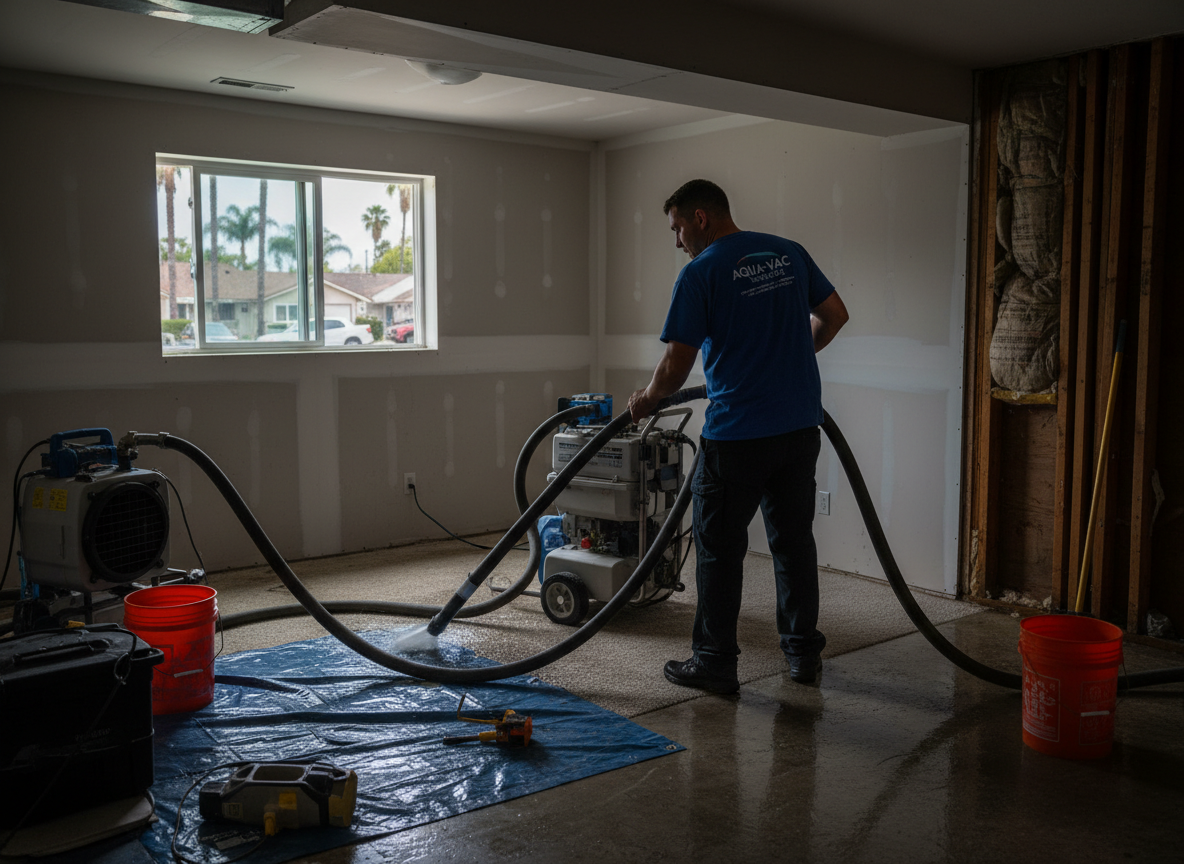
Harbor City homes built before the 1980s often have galvanized or cast-iron supply lines that corrode from the inside, especially in the milder but salt-tinged air near the coast. When a pinhole leak develops behind a wall or under a slab, moisture travels along the concrete foundation toward the ocean side of the property, creating hidden pockets that standard fans miss. Restoration crews must pull baseboards and use moisture meters on both sides of the shared walls common in Harbor Pines duplexes to map the full extent before any drying begins.
Los Angeles County building codes require permits for slab repairs when leaks originate under the foundation, and crews working near Lomita or Wilmington routinely coordinate with the city inspector before breaking concrete. The ocean-moderated climate keeps daytime temperatures moderate year-round, which slows evaporation and forces the use of dehumidifiers running longer than they would in inland neighborhoods. Technicians also watch for mold growth on the paper facing of drywall because the steady humidity prevents surfaces from drying naturally.
After extraction, crews reinstall baseboards with expansion gaps to accommodate any future movement from the clay-heavy soil that underlies much of Harbor City. Homeowners in San Pedro and Wilmington frequently discover that leaks near the street side of the lot are fed by older municipal laterals that the city is gradually replacing, so restoration stops at the property line and the owner is directed to contact the Department of Water and Power.
Edge cases include leaks that travel under the garage slab into the living space through the expansion joint, requiring temporary relocation of vehicles and furniture before the concrete can be opened. Every job ends with a written drying log that the homeowner can keep for insurance purposes.
Technician insight
In Harbor City the thing that catches most people out with water leak restoration is how quickly moisture travels under the slab toward the ocean side of the lot because of the slight downhill grade and clay soil. Older galvanized lines in homes near Harbor City Park corrode from the inside long before any visible drip appears, so homeowners often wait too long and end up replacing more drywall than necessary.
Hidden Slab Leak in Harbor Pines
A homeowner noticed buckling hardwood near the front door after a week of mild rain. Inspection revealed a pinhole leak in a 1970s galvanized line running under the slab. Crews opened a narrow trench along the foundation, extracted water that had traveled toward the street, dried the subfloor for five days, and replaced the affected flooring section without disturbing the rest of the living room.
How it works
- 1
Initial Assessment
Technician arrives within hours, locates the leak source, and documents moisture levels in walls, floors, and subflooring using meters and infrared cameras.
- 2
Water Extraction
Standing water is removed with portable pumps and wands, followed by removal of saturated carpet pads and baseboards to prevent hidden mold.
- 3
Drying and Monitoring
Industrial air movers and dehumidifiers are placed; daily moisture readings are recorded until affected materials return to normal levels.
- 4
Restoration and Repairs
Damaged drywall sections are replaced, floors are reinstalled, and surfaces are returned to pre-loss condition with minimal disruption to the household.
Pricing
Upfront quotes provided after inspection; final cost depends on extent of hidden damage and required drying time.