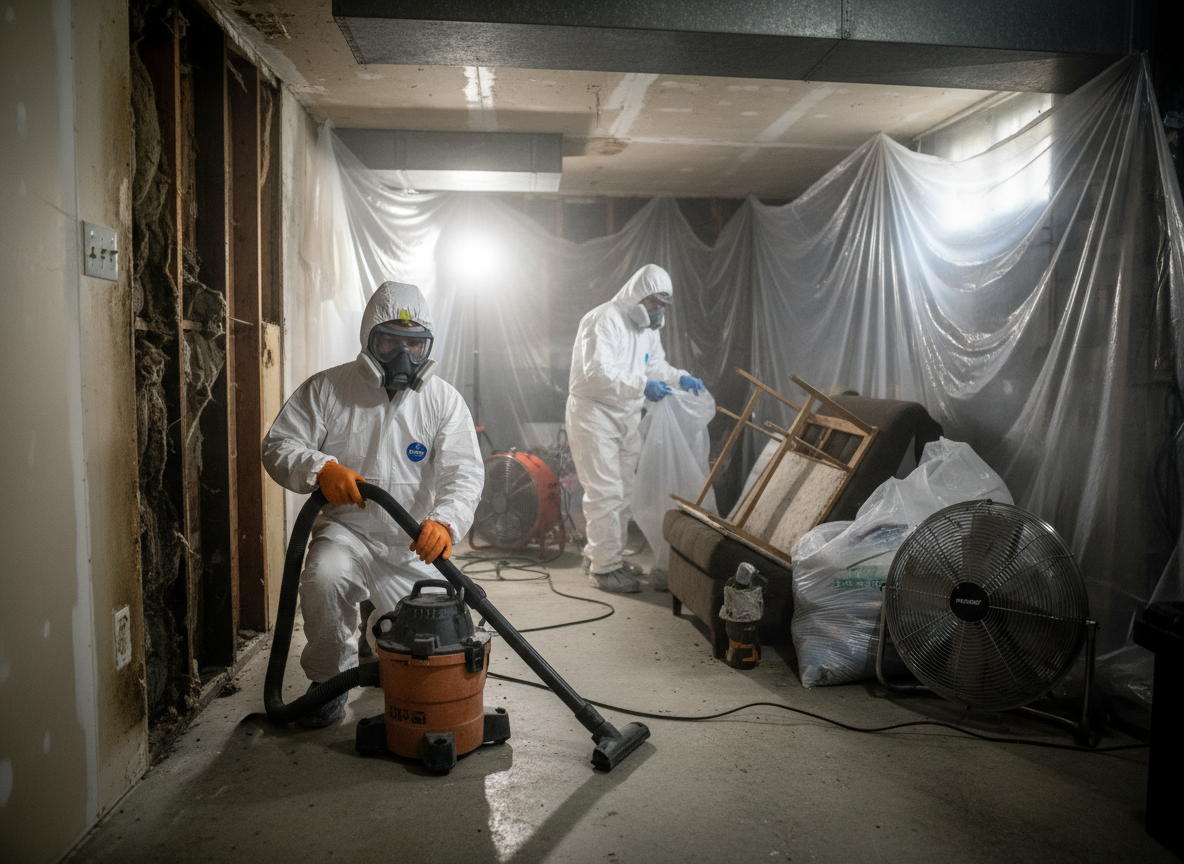
Water intrusion in Harbor City homes often leads to hidden mold growth behind walls and under floors, especially in the older housing stock common throughout Los Angeles County neighborhoods like Harbor Pines. The mild Mediterranean climate moderated by the ocean keeps ambient humidity elevated year-round, which slows natural drying and allows mold colonies to establish quickly in crawl spaces and attics after leaks from plumbing or storms. Technicians must account for this persistent moisture when selecting containment methods and antimicrobial treatments to prevent cross-contamination to adjacent rooms.
Remediation protocols here follow IICRC standards and local building codes that require proper ventilation and moisture mapping before any reconstruction begins. In areas near Kaiser Permanente Harbor City and Harbor City Park, crews frequently encounter slab-on-grade foundations that trap water against the concrete, creating ideal conditions for black mold under carpet pads and baseboards. Removing affected drywall sections without disturbing the remaining structure demands precise cuts and negative air machines to protect nearby residents in dense blocks of single-family homes.
Post-remediation verification includes air sampling and moisture meter readings at multiple points throughout the property to confirm levels have returned to normal for the coastal climate. Homeowners in San Pedro, Wilmington, and Lomita often call after noticing musty odors near HVAC returns, where condensation mixes with prior leaks. Addressing these edge cases prevents recurring growth that can affect indoor air quality for months if the source remains untraced.
Technician insight
In Harbor City, the thing that catches most people out with Mold remediation after water damage is how the ocean-moderated humidity keeps crawl spaces under 1960s-era homes near Harbor Pines damp long after the initial leak stops, so homeowners who only treat visible spots see it return within weeks.
Hidden Growth After Roof Leak
A Harbor City homeowner noticed a ceiling stain after winter rains. Inspection revealed mold extending into the attic insulation and down wall cavities. Containment was set, affected materials removed, and drying completed with dehumidifiers before new drywall was installed.
How it works
- 1
Initial Assessment
Technicians arrive within hours, map moisture with infrared cameras, and identify all affected materials in Harbor City homes.
- 2
Containment Setup
Plastic barriers and negative air machines isolate the work area to stop spores from spreading to unaffected rooms.
- 3
Removal and Cleaning
Damaged drywall, insulation, and flooring are removed, followed by HEPA vacuuming and antimicrobial application on remaining surfaces.
- 4
Drying and Verification
Industrial dehumidifiers and air movers run until moisture readings match coastal norms, then clearance testing confirms the space is safe.
Pricing
Pricing depends on the square footage impacted, depth of hidden growth, and drying time required; upfront quotes are provided after inspection.