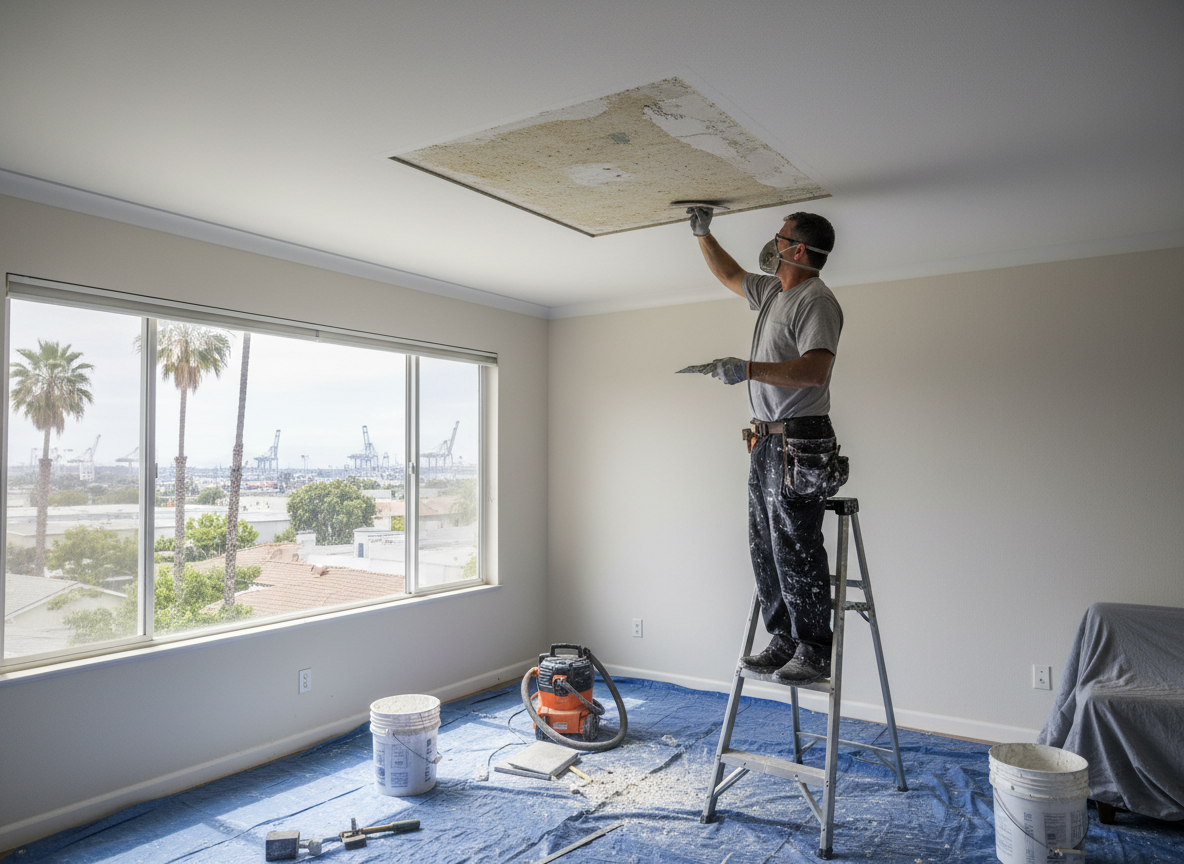
Homes in Harbor City and Harbor Pines often feature older plaster or drywall ceilings installed decades ago, which absorb moisture quickly and can sag or harbor hidden mold once water enters from roof penetrations or second-floor plumbing. The mild Mediterranean climate moderated by the ocean keeps temperatures moderate but introduces persistent humidity that slows natural drying, especially in tightly built neighborhoods close to Kaiser Permanente Harbor City where salt air can accelerate corrosion on metal lath behind plaster. Technicians must cut back to sound material, treat for microbial growth, and match textures precisely to avoid visible patches that stand out under coastal light.
Water intrusion in these ceilings frequently traces to wind-driven rain during occasional heavy storms or slow leaks from aging galvanized pipes common in pre-1970s housing stock. Los Angeles County building codes require proper vapor barriers and ventilation when repairs involve more than minor patches, and crews working near Harbor City Park must account for variable soil moisture that can push groundwater toward foundations and up into wall cavities feeding ceiling damage. Access is often limited by cathedral ceilings or acoustic tiles in Harbor Pines homes, requiring moisture meters and thermal imaging to map the full extent before any demolition.
Drying times extend in this ocean-moderated climate because ambient humidity rarely drops low enough for rapid evaporation, so containment and dehumidification equipment must run longer than in inland Los Angeles areas. Replacement materials are chosen to match existing construction—whether lath and plaster near older sections of Wilmington or standard drywall in newer Lomita-adjacent builds—to maintain structural integrity and fire ratings required by local ordinances.
Technician insight
In Harbor City the thing that catches most people out with ceiling water damage repair is how ocean humidity keeps plaster saturated for days after the leak stops, especially in older homes near Harbor City Park where original lath holds moisture against the joists and turns a small roof drip into widespread sagging.
Hidden Leak in Harbor Pines Ceiling
A homeowner in Harbor Pines noticed a faint brown stain above the kitchen. Inspection revealed a slow pinhole leak in an upstairs bathroom supply line that had traveled along joists. Crews removed a four-foot section of plaster, dried the cavity for three days using dehumidifiers suited to local humidity, replaced the pipe section, and reinstalled matching plaster. The ceiling was painted and the home returned to normal use within a week.
How it works
- 1
Inspection and Moisture Mapping
Technicians arrive 24/7 at the Harbor City address, use moisture meters and infrared cameras to trace water paths through ceilings without unnecessary demolition.
- 2
Containment and Water Removal
Plastic barriers isolate the work area, standing water is extracted, and affected materials are removed to prevent spread into adjacent rooms common in compact Harbor Pines layouts.
- 3
Drying and Antimicrobial Treatment
Industrial air movers and dehumidifiers run until readings return to normal, followed by EPA-registered treatments suited to the humid coastal conditions.
- 4
Repair and Finish Matching
New drywall or plaster is installed, textures are matched to original surfaces, and paint is applied to blend with surrounding ceilings in the home.
Pricing
Upfront quotes based on square footage, access difficulty, and drying duration; no hidden fees for work in Harbor City or adjacent neighborhoods.