2026-10-15 ·
Handling Water Damage From Roof Leaks During Harbor City Storms
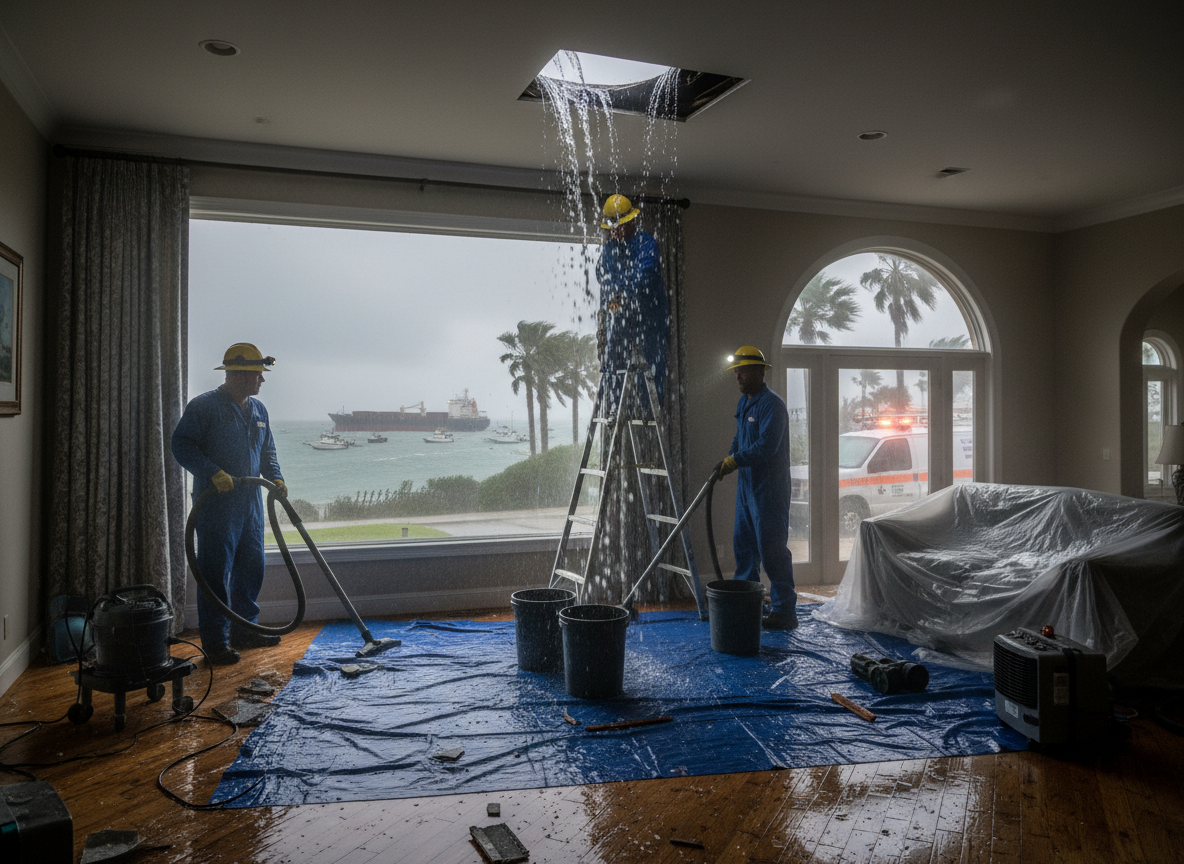
Handling roof leak water damage during Harbor City storms begins with stopping the intrusion at the source and completing water extraction within the first 24 to 48 hours to limit spread into ceilings and walls. The area's mild Mediterranean climate moderated by the ocean brings sudden winter downpours that test older roofs on homes built in the 1950s and 1960s throughout Harbor City and Harbor Pines. These rains often pool on flat or low-slope sections common in local housing stock, sending water through flashing around chimneys or vents. Acting before moisture reaches insulation or framing reduces the risk of structural weakening in single-story ranch homes typical to the neighborhood.
Storm Patterns and Roof Vulnerabilities in Harbor City
Harbor City's ocean-moderated weather produces intense but short bursts of rain rather than prolonged deluges, yet these events still overwhelm aging asphalt shingles and built-up roofing on homes near Harbor City Park. Wind-driven rain from Pacific storms pushes water under tiles at eaves and valleys, especially on properties in Harbor Pines where mature trees drop debris that clogs gutters. Nearby areas like Wilmington and Lomita share similar mid-century housing that often lacks modern underlayment, allowing leaks to travel along rafters into living spaces. Residents near Kaiser Permanente Harbor City frequently report ceiling stains after these events because stucco exteriors and original roof penetrations fail first. Checking attics after each storm reveals wet insulation before it sags and spreads moisture into drywall. Local terrain with gentle slopes toward the harbor can direct runoff against foundation walls, compounding roof issues when downspouts overflow. Understanding these patterns helps prioritize inspections on south-facing slopes that receive the brunt of onshore winds.
First Response and Water Extraction Steps
After spotting a roof leak, shut off power to affected rooms and contain the water with plastic sheeting to prevent further ceiling collapse. Contact a team for water leak restoration that uses moisture meters to trace hidden paths through plaster and lath common in Harbor City homes. Begin water extraction with truck-mounted pumps to remove standing water from floors, followed by air movers placed at 45-degree angles to pull moisture from cavities. In neighborhoods like Harbor Pines, crews often cut small access points in ceilings to drain trapped water without removing entire sections. Document every step with photos for insurance adjusters who handle Los Angeles County claims. Avoid DIY fans that recirculate humid air and prolong drying times beyond the critical 48-hour window. Professional equipment reaches behind baseboards and into subfloors where ocean humidity slows natural evaporation.
Drying, Monitoring, and Mold Prevention
Once bulk water is removed, dehumidifiers run continuously at 40-50% relative humidity while technicians monitor readings every 24 hours with thermal imaging cameras. This process typically takes 3 to 7 days in Harbor City's coastal air, longer than inland Los Angeles spots because of persistent marine layer moisture. Link to guidance on preventing mold growth after water intrusion in coastal Harbor City for details on treating porous materials like carpet padding that must be discarded. Water damage mitigation includes antimicrobial applications on framing to inhibit growth in crawl spaces under older homes. Follow up with ceiling water damage repair that replaces saturated drywall and insulation while preserving original architectural details valued in the area. Track costs through detailed logs, as factors like square footage affected and material types influence totals discussed in what affects water damage restoration costs in Harbor City. Final clearance testing confirms moisture levels below 15% before reconstruction begins.